What is the difference between sea, swell and wave height in a marine forecast?
Sea is the waves the local wind is making now: short, steep chop. Swell has travelled from wherever the wind made it, sometimes a long way off, so there can be swell when the local wind is calm. Total wave height, also called the combined sea and swell or significant wave height, is the average height of the highest third of the waves.
The two do not simply add. The Bureau’s own example: a forecast 1.5 m sea and a 1.5 m swell make a total of about 2.1 m. And the forecast is not the biggest wave you will meet. About one wave in every 2,000 to 3,000, three or four times a day, will be about twice the total wave height. The Bureau says to be ready for one before you go out.
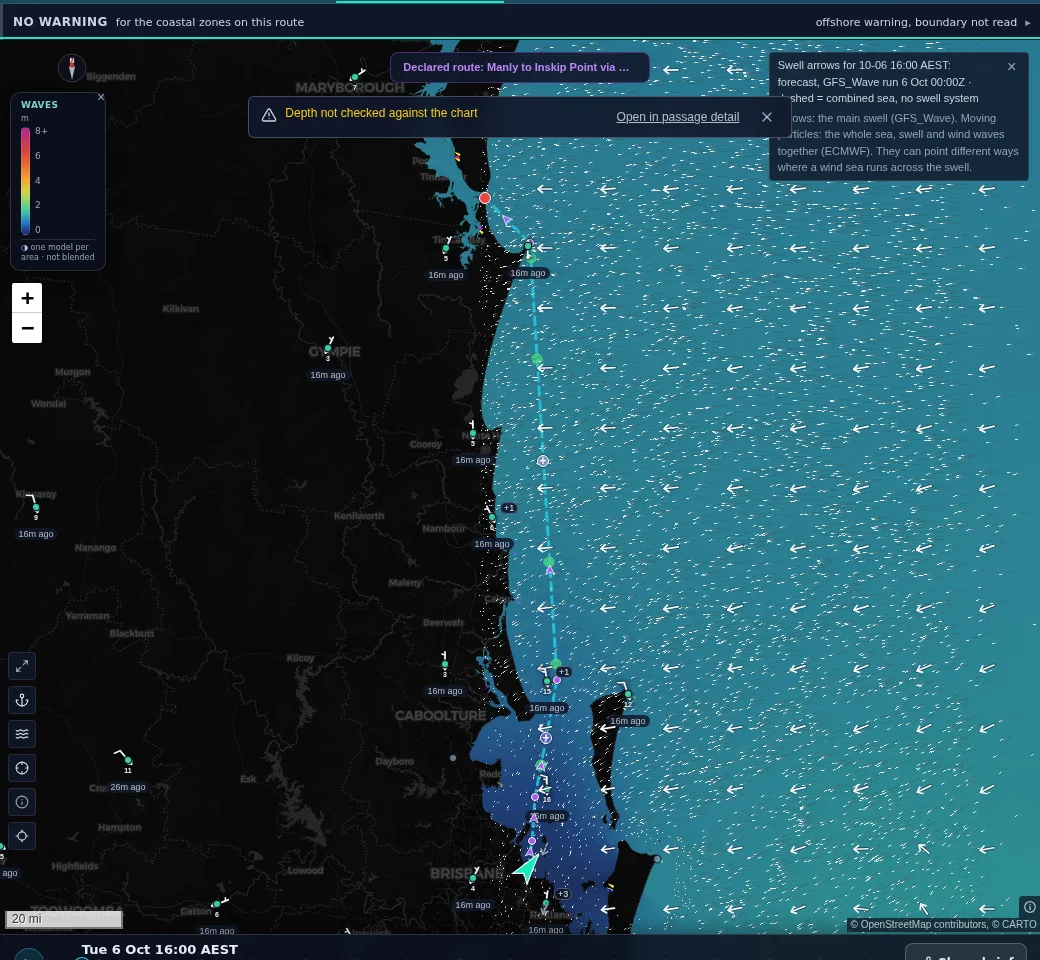
Shimbiri draws both on the chart: the height of the whole sea in colour, and the main swell as arrows showing where it is coming from. Local Knowledge adds the swell measured at the nearest wave buoy, so you can check the forecast against the water.
Definitions and figures from the Bureau’s pages, read 6 October 2026. Shimbiri’s wave layer shows the combined sea height and the main swell; Local Knowledge reads the nearest wave buoy.
General information for Australian operators, current as of 6 October 2026. Rules change and recreational rules vary by state. Always confirm against the source(s) linked above (your AMSA, Australian Sailing or state maritime authority). This is not legal advice.